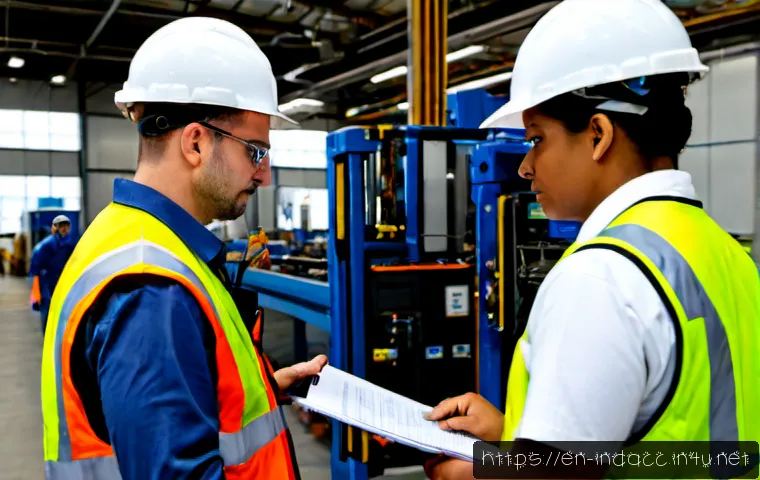
The world of workplace safety is a complex web of regulations and standards, aiming to protect employees from harm. With globalization, these standards are increasingly interconnected, influencing how businesses operate across borders.
These international guidelines are not just about ticking boxes; they represent a fundamental commitment to the well-being of workers and the sustainable practices that forward-thinking companies are adopting.
The goal is to create a safer, healthier, and more ethical working environment for everyone, regardless of location. Ignoring these standards can lead to severe consequences, including legal repercussions and reputational damage.
Let’s dive deeper into this important topic and see how these regulations are shaping the future of work! Let’s get a clearer picture of this in the following article.
Navigating the Labyrinth of Global Safety Standards

Ever feel like workplace safety regulations are a tangled mess? You’re not alone! It’s a bit like trying to decipher a foreign language when you’re dealing with international standards. But understanding these guidelines is crucial for companies operating across borders. Take OSHA (Occupational Safety and Health Administration) in the U.S. for example. They have very specific rules about everything from fall protection to hazardous chemical handling. Now, compare that to the EU’s regulations under the European Agency for Safety and Health at Work (EU-OSHA). They emphasize a more holistic approach, focusing on risk assessment and prevention. It’s not just about following rules, but about creating a safety-conscious culture.
Understanding Regional Differences
What I’ve noticed is that the devil is often in the details. For instance, in some countries, worker representation on safety committees is mandatory. This means employees have a direct say in shaping safety policies. In other regions, it’s more management-driven. Knowing these differences can make or break your compliance strategy. I remember a company I worked with that tried to implement a U.S.-style safety program in Germany. It was a disaster! They hadn’t considered the strong role of worker councils (“Betriebsrat”) in German workplaces. The program was seen as top-down and was quickly rejected. Learning from that, we had to adapt our approach, working closely with the worker representatives to create a program that respected local norms and regulations.
The Role of International Organizations
Organizations like the International Labour Organization (ILO) play a key role in setting global benchmarks. The ILO’s conventions and recommendations provide a framework for national laws and regulations. Think of them as the foundation upon which each country builds its own safety structure. By adhering to ILO standards, companies can demonstrate their commitment to ethical labor practices and gain a competitive edge. For instance, the ILO’s Convention 155 focuses on occupational safety and health. It calls for national policies that promote a safe and healthy working environment. Countries that ratify this convention are obligated to implement these policies through their national laws. This creates a ripple effect, influencing workplace safety standards worldwide. It’s not just about compliance; it’s about creating a safer world for everyone.
Decoding the Impact of Cultural Factors on Safety Implementation
I’ve learned that it’s not enough to simply translate safety manuals into different languages. You have to understand the cultural context. What works in one country might not work in another. For example, in some cultures, direct confrontation is avoided. This can make it difficult to address safety violations effectively. Imagine trying to correct a worker who isn’t wearing proper safety gear in a culture where saving face is paramount. A direct reprimand might be seen as disrespectful and could damage your relationship with the worker. Instead, you might need to use a more indirect approach, such as positive reinforcement or group training sessions.
Adapting Training Programs to Local Norms
Cultural sensitivity is key when designing safety training programs. In some cultures, a hierarchical structure is deeply ingrained. This means workers may be hesitant to question authority, even if they have safety concerns. In these cases, you need to create a safe space for workers to voice their concerns without fear of reprisal. One approach is to use anonymous feedback mechanisms, such as suggestion boxes or online surveys. Another is to train supervisors to be more approachable and receptive to employee concerns. Ultimately, the goal is to create a culture where safety is everyone’s responsibility, regardless of their position in the hierarchy.
The Influence of Communication Styles
How you communicate about safety can also be affected by cultural factors. In some cultures, direct and assertive communication is valued. In others, indirect and nuanced communication is preferred. It’s important to adapt your communication style to the local context. For instance, if you’re communicating with workers from a high-context culture, you might need to provide more background information and context. You should also be aware of nonverbal cues, such as body language and facial expressions. These cues can convey important messages that are not explicitly stated. By being mindful of these cultural differences, you can communicate more effectively about safety and build trust with your workforce.
Technology’s Role in Enforcing Global Safety Standards
The rise of technology has revolutionized workplace safety. From wearable sensors to advanced data analytics, technology is helping companies to identify hazards, prevent accidents, and improve overall safety performance. One of the most promising technologies is predictive analytics. By analyzing historical data, companies can identify patterns and trends that might indicate potential safety risks. For example, if a particular machine has a history of breakdowns, predictive analytics can be used to predict when the next breakdown is likely to occur. This allows companies to take preventive measures, such as scheduling maintenance or replacing the machine, before an accident happens.
The Internet of Things (IoT)
IoT devices are transforming workplace safety by providing real-time data on a wide range of factors, such as air quality, temperature, and noise levels. This data can be used to identify potential hazards and to take corrective actions. For instance, if a sensor detects that the air quality in a particular area is poor, it can automatically trigger an alarm and alert workers to evacuate. IoT devices can also be used to monitor worker behavior and to provide feedback on safety performance. For example, wearable sensors can track workers’ movements and alert them if they are entering a hazardous area or if they are not following proper safety procedures. This technology is not just about collecting data; it’s about using that data to improve safety outcomes.
Virtual Reality (VR) and Augmented Reality (AR)
VR and AR are increasingly being used for safety training. These technologies allow workers to experience realistic simulations of hazardous situations, such as fires, explosions, and chemical spills, without being exposed to actual danger. This type of training can be more effective than traditional methods, as it allows workers to learn by doing and to develop the skills they need to respond effectively in an emergency. For example, workers can use VR to practice evacuating a building during a fire or to learn how to operate a fire extinguisher. AR can be used to overlay safety information onto real-world environments, such as highlighting hazards or providing instructions on how to use equipment safely.
The Economics of Safety: Justifying Investments in Prevention
Some businesses view safety as an expense. But smart companies know it’s an investment. Accidents cost money – a lot of money. Think about lost productivity, workers’ compensation claims, and potential lawsuits. A proactive approach to safety can save you a fortune in the long run. I remember consulting for a manufacturing plant that had a high accident rate. They were constantly dealing with injuries and downtime. By investing in safety training, equipment upgrades, and a more robust safety management system, they significantly reduced their accident rate. Not only did this improve employee morale, but it also saved them a ton of money in reduced costs and increased productivity.
Measuring the ROI of Safety Initiatives
Quantifying the return on investment (ROI) of safety initiatives is key to gaining buy-in from management. This involves tracking metrics such as accident rates, workers’ compensation costs, and lost workdays. By demonstrating the financial benefits of safety, you can make a strong case for investing in prevention. One way to measure the ROI is to calculate the cost of accidents before and after implementing a safety initiative. For example, if a company spends $100,000 on a safety training program and reduces its workers’ compensation costs by $200,000, the ROI is 100%. Another way to measure the ROI is to track productivity gains. By reducing accidents and downtime, companies can improve their overall productivity and profitability.
Incentivizing Safety Performance

Incentive programs can be a powerful tool for promoting a safety culture. By rewarding employees for safe behavior, you can encourage them to take ownership of safety. However, it’s important to design incentive programs carefully. You don’t want to create incentives that could lead to underreporting of accidents or other undesirable behaviors. For example, rewarding employees for having zero accidents could discourage them from reporting injuries. A better approach is to reward employees for actively participating in safety activities, such as attending training sessions, reporting hazards, and making safety suggestions. The key is to focus on promoting a proactive safety culture, rather than simply rewarding outcomes.
Global Supply Chains: Ensuring Safety Across Borders
Today’s global supply chains are complex webs of interconnected businesses. Ensuring safety across these chains is a major challenge. You need to verify that your suppliers are adhering to the same safety standards as you are. This means conducting audits, providing training, and working collaboratively to improve safety performance. I’ve seen companies get into trouble for turning a blind eye to safety practices in their supply chains. A major clothing retailer was hit with a scandal when it was revealed that its overseas suppliers were using child labor and operating in unsafe conditions. The retailer’s reputation was severely damaged, and it faced significant financial penalties. This is a cautionary tale that highlights the importance of due diligence in global supply chains.
Conducting Supplier Audits
Regular supplier audits are essential for verifying compliance with safety standards. These audits should be conducted by qualified professionals who are familiar with the relevant regulations and best practices. The audits should cover a wide range of areas, including workplace conditions, equipment maintenance, and safety training. It’s important to establish clear expectations with your suppliers and to provide them with feedback on their performance. If you identify any areas of concern, work with your suppliers to develop a corrective action plan. The goal is not to punish suppliers but to help them improve their safety performance.
Building Collaborative Partnerships
Building strong relationships with your suppliers is key to ensuring safety across your supply chain. This involves open communication, shared learning, and a commitment to continuous improvement. Work with your suppliers to develop a safety management system that meets your standards. Provide them with training and support to help them implement the system effectively. Encourage them to share their best practices with other suppliers. By working together, you can create a culture of safety that extends throughout your entire supply chain.
The Role of Government and Regulatory Bodies
Government agencies and regulatory bodies play a crucial role in setting and enforcing workplace safety standards. These organizations are responsible for developing regulations, conducting inspections, and imposing penalties for violations. In the U.S., OSHA is the primary federal agency responsible for workplace safety. In the EU, each member state has its own national agency, but they all operate within the framework of EU-OSHA. These agencies work to protect workers by setting standards, providing training, and enforcing regulations. They also play a role in promoting research and development in the field of workplace safety.
Enforcement Mechanisms and Penalties
Government agencies have a range of enforcement mechanisms at their disposal, including inspections, citations, and penalties. Inspections are conducted to ensure that workplaces are in compliance with safety regulations. If violations are found, the agency can issue a citation, which requires the employer to correct the violation and pay a penalty. The size of the penalty depends on the severity of the violation. In some cases, employers may also face criminal charges. The goal of enforcement is to deter employers from violating safety regulations and to ensure that they take steps to protect their workers.
The Impact of Political and Economic Factors
Political and economic factors can have a significant impact on workplace safety. In some countries, government regulations may be weak or poorly enforced due to political corruption or a lack of resources. In other countries, economic pressures may lead employers to cut corners on safety in order to save money. It’s important to be aware of these factors when operating in different countries and to take steps to mitigate the risks. This may involve conducting your own safety audits, providing training to workers, and working with local organizations to promote safety.
| Regulation/Standard | Description | Key Aspects | Enforcement Body |
|---|---|---|---|
| OSHA (US) | Occupational Safety and Health Administration standards in the United States. | Covers a wide range of workplace hazards, including fall protection, hazardous materials, and machine guarding. | OSHA |
| EU-OSHA (Europe) | European Agency for Safety and Health at Work guidelines. | Focuses on risk assessment, prevention, and promoting a culture of safety. | National enforcement agencies within EU member states |
| ILO Conventions | International Labour Organization’s conventions and recommendations. | Provides a global framework for national laws and regulations on occupational safety and health. | National governments, with ILO oversight |
| ISO 45001 | International standard for occupational health and safety management systems. | Provides a framework for organizations to improve employee safety, reduce workplace risks, and create safer working conditions. | Third-party certification bodies |
Navigating the maze of global safety standards can feel overwhelming, but it’s an investment in your company’s future and the well-being of your employees.
By understanding the nuances of different regulations, embracing cultural sensitivity, and leveraging technology, you can create a safer and more productive workplace, no matter where you operate.
Remember, safety isn’t just a set of rules – it’s a culture that needs to be nurtured and continuously improved.
In Conclusion
Ultimately, workplace safety transcends mere compliance; it’s about fostering a culture of care and prevention. From understanding international standards to embracing technological advancements, every step towards safety is a step towards a more ethical and productive future. Let’s commit to making every workplace a safer place, one initiative at a time.
Good to Know Information
1. OSHA Resources: The OSHA website (www.osha.gov) offers a wealth of information, including safety standards, training materials, and compliance assistance.
2. EU-OSHA Tools: EU-OSHA provides practical tools and guidance for implementing effective safety management systems. Check out their website (https://osha.europa.eu/en) for resources.
3. ILO Conventions Database: Access the ILO’s database of conventions and recommendations to understand global benchmarks for labor standards (www.ilo.org).
4. ISO 45001 Certification: Consider pursuing ISO 45001 certification to demonstrate your commitment to occupational health and safety.
5. Local Chamber of Commerce: Connect with your local Chamber of Commerce for information on regional safety regulations and resources.
Key Takeaways
Global safety standards are diverse, requiring adaptation to local laws and cultural norms.
Cultural sensitivity is crucial in safety training and communication to ensure effectiveness.
Technology like IoT and VR enhances hazard detection and safety training.
Investing in safety improves ROI by reducing accidents and boosting productivity.
Supplier audits and partnerships ensure safety across global supply chains.
Frequently Asked Questions (FAQ) 📖
Q: What’s the real deal if a company decides to brush off international workplace safety standards?
A: Okay, so imagine a company thinking they can cut corners and ignore these global safety rules. First off, they’re looking at some serious legal trouble – fines that can sting, lawsuits that drag on, and even the possibility of getting shut down in certain areas.
But beyond the legal stuff, there’s the PR nightmare. Word gets out that you’re not prioritizing your workers’ well-being, and suddenly nobody wants to work for you, invest in you, or even buy your stuff.
I saw this happen to a construction company once; they ignored safety regulations, had a major accident on site, and their reputation took such a hit they struggled to get new contracts for years.
It’s a gamble that almost never pays off.
Q: Are these international standards just a bunch of red tape, or do they actually make a difference?
A: Honestly, when I first heard about them, I thought, “Oh great, more paperwork.” But after seeing how they’re implemented on the ground, I’ve changed my tune.
These standards aren’t just about filling out forms; they’re about creating a culture of safety. They force companies to think proactively about potential hazards, train their employees properly, and invest in the right equipment.
I remember touring a manufacturing plant that had recently implemented ISO 45001, the international standard for occupational health and safety. The difference was night and day.
Employees were more engaged, the accident rate was down, and the overall atmosphere was just more positive. It’s not always easy to implement, but the benefits are real.
Q: How do these international guidelines affect small businesses that are trying to compete with larger corporations?
A: That’s a fair question, and it’s something I’ve definitely seen small businesses grapple with. At first glance, it might seem like these standards put smaller companies at a disadvantage because they have fewer resources to invest in compliance.
However, I’ve also seen small businesses use these standards to their advantage. By becoming certified in something like ISO 45001, they can differentiate themselves from competitors and win contracts with larger clients who are looking for suppliers with a strong commitment to safety.
Plus, a safer workplace means fewer accidents, lower insurance costs, and higher employee morale, all of which can help a small business thrive. It’s an investment that can pay off in the long run, evening the playing field a bit.
📚 References
Wikipedia Encyclopedia
구글 검색 결과
구글 검색 결과
구글 검색 결과
구글 검색 결과
구글 검색 결과