Hey everyone, let’s be real for a moment. Have you ever found yourself in the thick of an industrial accident investigation, feeling that incredible pressure mounting with every ticking second?
It’s not just about paperwork; it’s about lives, livelihoods, and preventing future tragedies. The sheer volume of data, witness statements, and regulatory hoops can feel absolutely overwhelming, making efficient time management not just a good idea, but an absolute necessity.
I’ve personally grappled with the intense demands of these situations, and believe me, knowing how to navigate them smartly can make all the difference between a rushed, incomplete report and a thorough, impactful resolution.
It’s about more than just speed; it’s about strategic action and clarity in chaos, especially with today’s evolving complexities and the critical need for precision.
Let’s dive into exactly how you can reclaim control and conduct investigations with unparalleled efficiency.
Harnessing the Initial Chaos: Critical First Steps

You know that moment, right? The phone rings, and your heart sinks a little because you know it’s not good news. An industrial incident has just happened.
The immediate aftermath of an accident is a whirlwind, a chaotic mess where minutes feel like seconds and every decision carries immense weight. I’ve been there, staring at a scene, feeling that adrenaline surge, and knowing that how I handle the very first hours will dictate the entire investigation’s success.
It’s not just about showing up; it’s about a finely tuned, almost instinctive response. This isn’t the time for guesswork; it’s about executing a pre-planned, robust initial response that stabilizes the scene, preserves crucial evidence, and sets the stage for a meticulous inquiry.
Without a clear head and a defined process, you risk critical information being lost, narratives getting muddled, and ultimately, missing key opportunities to understand what truly went wrong.
It’s an overwhelming responsibility, but with the right approach, you can transform that initial chaos into a focused, productive starting point. I’ve learned that a swift, organized start minimizes panic and maximizes clarity, which is invaluable.
Securing the Scene and Preserving Evidence
The absolute first thing on my mind is always the scene. It’s like a crime scene, but with a different kind of victim and a different kind of justice.
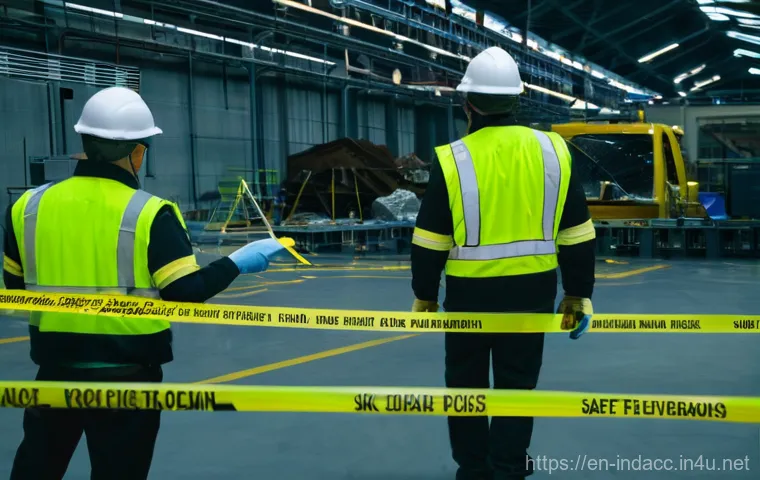
You need to secure it immediately to prevent further injury and preserve any and all potential evidence. This means establishing a clear perimeter, ensuring no unauthorized personnel enter, and taking initial photographs or videos before anything is disturbed.
I’ve seen situations where well-meaning individuals, in their haste to help or clean up, inadvertently destroy vital clues. It’s heartbreaking to realize a key piece of the puzzle is gone forever because the scene wasn’t properly protected in those critical first moments.
This isn’t just about big machinery; it’s about tools, debris, liquid spills, and even the positions of items. Think of it as a snapshot in time; you want that snapshot to be as clear and untainted as possible.
Assembling Your Rapid Response Squad
You can’t do this alone, nor should you try. A rapid response team is your lifeline. This isn’t just a collection of names; it’s a strategically assembled group with diverse skill sets: safety officers, maintenance experts, HR representatives, legal counsel, and even a communications person.
I’ve found that having a pre-identified team, with clear roles and responsibilities, drastically cuts down on response time and eliminates confusion when an incident strikes.
Everyone knows what they need to do, where they need to be, and what information they are responsible for gathering. It’s about leveraging collective expertise to gather information swiftly and accurately, making sure every angle is covered from the get-go.
This team becomes your eyes, ears, and hands, allowing you to cover more ground and gather more insights than any single individual ever could.
The Strategic Investigator’s Toolkit: Planning for Precision
Let’s face it, nobody enjoys being caught flat-footed. In the high-stakes world of industrial accident investigations, meticulous planning isn’t just a suggestion; it’s the bedrock of a successful outcome.
I’ve come to understand that the real work often begins long before an incident ever occurs, in the quiet moments of preparation and strategy. This isn’t about predicting the unpredictable, but about building a robust framework that allows you to react with precision, not panic.
Think of it like a seasoned chess player who’s always thinking several moves ahead. Having a well-defined investigation plan means you’re not scrambling to figure out what to do next when emotions are high and time is of the essence.
It ensures consistency, even when the pressure is immense, and guarantees that no critical step is overlooked. From resource allocation to communication protocols, every detail matters, and a solid plan serves as your compass, guiding you through the storm.
Developing a Comprehensive Investigation Protocol
I can’t stress this enough: have a written protocol. It’s your blueprint, your bible, your guide through the wilderness. This document should outline every single step, from initial notification to final report submission.
It needs to detail who does what, when, and how. We’re talking about specific forms for evidence collection, clear guidelines for witness interviews, a timeline for various stages, and criteria for determining root causes.
I’ve personally created and refined these over the years, learning from every investigation. Having a standardized approach means that even under duress, your team follows a consistent methodology, which greatly enhances the credibility and defensibility of your findings.
It also serves as an excellent training tool for new investigators, ensuring institutional knowledge is passed on effectively.
Allocating Resources Wisely: Time and Personnel
Resources are always finite, and in an investigation, time is perhaps the most precious. You can’t afford to waste it. This is where wise allocation comes into play.
Before you even dive deep, you need to assess the scale and complexity of the accident. Is it a minor incident that can be handled by a smaller team, or a major catastrophe requiring extensive external resources?
I always start by defining the scope, then assigning personnel based on their expertise and availability. It’s also about setting realistic timelines for data collection, analysis, and reporting.
Over-committing or under-resourcing can lead to burnout, missed deadlines, and ultimately, a compromised investigation. Learning to prioritize tasks and delegate effectively is an art form in itself, one that truly defines an efficient investigator.
Unlocking Insights: Data Collection Done Right
Imagine trying to piece together a jigsaw puzzle with half the pieces missing or many pieces from a different puzzle entirely. That’s what an investigation feels like if your data collection isn’t spot-on.
I’ve learned, often the hard way, that simply gathering “stuff” isn’t enough. You need to gather the *right* stuff, in the *right* way, to truly unlock the insights hidden within an incident.
This phase is less about brute force and more about surgical precision. Every piece of information, from a bolt on the floor to a temperature reading on a machine, tells a part of the story.
The challenge lies in connecting these disparate dots to form a coherent narrative of what happened and, more importantly, *why* it happened. It requires a keen eye, a critical mind, and an almost obsessive attention to detail to ensure nothing slips through the cracks.
Categorizing and Prioritizing Evidence
Not all evidence is created equal. Some pieces are foundational, others supportive, and some might even be red herrings. My approach is to immediately categorize evidence as it’s collected.
Is it physical (equipment, parts, materials)? Documentary (logs, reports, procedures)? Or human (witness statements, interviews)?
Once categorized, I prioritize. What evidence is most time-sensitive or critical to understanding the immediate chain of events? For example, rapidly degrading evidence like volatile substances or perishable data needs immediate attention.
I’ve found that a simple system for labeling, logging, and storing evidence is invaluable; it keeps things organized and prevents critical items from getting lost in the shuffle.
Documenting Everything: The Paper Trail Principle
If it wasn’t documented, it didn’t happen – that’s a mantra I live by in investigations. From the moment you arrive on scene until the final report is signed, every action, observation, and communication must be meticulously recorded.
This includes photographs, videos, measurements, sketches, and detailed written notes. I always carry a dedicated notebook and voice recorder because you never know when a fleeting detail might become the key to solving the mystery.
This comprehensive documentation serves as an irrefutable record, protecting the integrity of your investigation and providing a solid foundation for your findings.
It’s not just about covering your backside; it’s about building a robust, defensible case that stands up to scrutiny.
| Evidence Type | Collection Method | Prioritization | Key Considerations |
|---|---|---|---|
| Physical Evidence (e.g., equipment, parts) | Photography, detailed labeling, secure bagging/storage, chain of custody forms | High (especially if prone to degradation or easily moved) | Maintain integrity, prevent contamination, preserve original state |
| Documentary Evidence (e.g., logs, procedures, emails) | Secure copies (digital/physical), timestamping | Medium to High (depending on relevance to immediate incident) | Authenticity, completeness, digital forensics if applicable |
| Human Evidence (e.g., witness statements, interviews) | Recorded interviews, written statements, signed declarations | High (especially early statements) | Timeliness, neutrality, privacy concerns, potential for bias |
| Environmental Data (e.g., weather, air quality) | On-site readings, official reports, historical data | Medium (contextual information) | Accuracy of instruments, relevance to incident mechanism |
Mastering the Human Connection: Artful Witness Interviews
When you’re dealing with an industrial accident, it’s never just about machines and mechanics; it’s deeply, profoundly about people. Witness interviews are often the beating heart of an investigation, providing perspectives and details that no piece of physical evidence ever could.
But let me tell you, this isn’t just a simple Q&A session. It’s an art form, a delicate dance of empathy, active listening, and gentle probing. I’ve sat across from people who were shaken, traumatized, or even defensive, and it’s in those moments that your ability to connect on a human level becomes paramount.
Rushing or being overly aggressive can shut someone down faster than anything, making you miss out on that critical piece of information. It’s about creating a safe space where individuals feel comfortable sharing their truth, free from judgment, because their truth is a vital piece of the puzzle you’re trying to solve.
Establishing Rapport and Trust
Before I even utter a single investigative question, my primary goal is always to establish rapport. This means listening more than talking, showing genuine empathy for their situation, and assuring them that their contribution is valuable and appreciated.
I often start by simply asking how they’re doing, acknowledging the difficulty of the situation. It’s not about being their friend, but about being a respectful, trustworthy professional.
I’ve found that when people feel heard and respected, they are far more likely to open up and provide candid accounts. Building that bridge of trust allows them to relay their experiences without fear, which is absolutely essential for gathering accurate and unbiased information.
It truly makes all the difference in the world.
Effective Questioning Techniques for Uncovering Truth
Once rapport is established, the real work of questioning begins, but it’s not a cross-examination. My philosophy is to use open-ended questions that encourage detailed narratives rather than simple ‘yes’ or ‘no’ answers.
“Tell me everything you saw from the moment you arrived that morning until the incident occurred” is far more effective than “Did you see anything unusual?” I also practice active listening, paying attention not just to *what* is said, but *how* it’s said, noting any hesitations or emotional cues.
Follow-up questions are crucial, but they must be gentle and clarifying, never accusatory. It’s about guiding the witness to recall details more vividly, to fill in gaps, and to clarify any ambiguities, always focusing on facts and observations rather than speculation.
Leveraging Technology: Smart Tools for Smarter Investigations

Gone are the days when a pen, paper, and a camera were the pinnacle of an investigator’s toolkit. Today, technology has utterly transformed the landscape of accident investigations, offering us capabilities that were once the stuff of science fiction.
I’ve embraced these advancements wholeheartedly because, frankly, they make our jobs not just easier, but profoundly more effective. From detailed scene mapping to sophisticated data analysis, the right tech can save countless hours, enhance accuracy, and even uncover insights that might otherwise remain hidden.
It’s about working smarter, not just harder, and leveraging every available resource to paint the clearest possible picture of an incident. Embracing these innovations isn’t just about staying current; it’s about elevating the quality and efficiency of every investigation we undertake.
Digital Mapping and 3D Modeling for Scene Recreation
One of the most incredible technological leaps for me has been in scene documentation. Forget rudimentary sketches; we can now use drones, laser scanners, and photogrammetry software to create incredibly accurate 3D models and digital maps of an accident site.
I’ve personally used these to walk through a virtual recreation of a scene days or even weeks after the physical scene has been cleared. This allows for precise measurements, identification of critical spatial relationships, and even animation of event sequences.
It’s invaluable for analysis, expert testimony, and even training future investigators. The level of detail these tools provide is simply astounding and dramatically improves our ability to understand complex events.
Advanced Data Analytics for Root Cause Identification
Beyond documenting the scene, technology empowers us to dive deep into the data itself. Modern industrial systems generate an incredible amount of telemetry, sensor readings, and operational logs.
Trying to sift through all of that manually would be a nightmare. This is where advanced data analytics tools come into play. They can process vast datasets, identify patterns, flag anomalies, and correlate seemingly unrelated events, helping to pinpoint potential root causes that might otherwise be invisible.
I’ve seen these tools highlight subtle equipment malfunctions or operational deviations that, when combined, led directly to an incident. It’s like having a super-powered detective sifting through mountains of information in seconds, revealing hidden connections.
The Ripple Effect: Turning Findings into Future Safety
An investigation isn’t truly complete until its findings lead to tangible improvements. It’s not just about assigning blame or checking a box; it’s about learning, adapting, and ultimately, preventing future tragedies.
This is where the ripple effect comes into play: a thorough investigation should cascade into a safer work environment for everyone. I’ve always felt a profound sense of responsibility to ensure that the hard-won lessons from an incident aren’t just filed away, but actively translated into proactive measures.
It’s the ultimate validation of all the long hours, the meticulous data gathering, and the challenging interviews. If an accident occurs and nothing changes, then in my view, the investigation itself has failed to achieve its most critical purpose.
This is where the real impact of our work truly shines.
Developing Actionable Recommendations and Preventative Measures
The core output of any investigation, beyond the narrative of what happened, should be a clear set of actionable recommendations. These aren’t vague suggestions; they are concrete steps that an organization can take to mitigate risks and prevent recurrence.
I always ensure these recommendations are specific, measurable, achievable, relevant, and time-bound (SMART). Whether it’s revising a procedure, implementing new training, upgrading equipment, or redesigning a workspace, each recommendation needs to directly address an identified root cause.
I’ve found that presenting these with a clear rationale, backed by evidence from the investigation, significantly increases the likelihood of their implementation.
It’s about providing a roadmap to a safer future.
Communicating Lessons Learned Across the Organization
What good are lessons learned if they’re not shared? Effective communication of investigation findings is absolutely paramount. This isn’t just about a formal report; it’s about creating awareness and fostering a culture of safety across all levels of the organization.
I advocate for various communication channels, from executive summaries for leadership to toolbox talks for frontline workers. Visual aids, simplified language, and interactive sessions can make complex findings accessible and impactful.
The goal is to ensure that everyone, from the CEO to the newest hire, understands what happened, why it happened, and what needs to change. It’s about embedding the lessons into the organizational DNA, making them a part of everyday operations and decision-making.
Cultivating Your Investigation Dream Team
You might be the lead investigator, but you’re never truly alone in this mission. The strength of any industrial accident investigation rests heavily on the shoulders of the team you build and nurture.
I’ve seen firsthand how a cohesive, well-trained team can navigate the most complex and emotionally charged situations with grace and efficiency. Conversely, a disjointed team can turn a challenging investigation into an absolute nightmare.
This isn’t just about assigning tasks; it’s about fostering an environment of mutual respect, shared purpose, and continuous learning. It’s about understanding that each member brings a unique perspective and expertise to the table, and that true synergy comes from valuing and integrating those diverse contributions.
Building a dream team isn’t an overnight process; it’s an ongoing investment in people and their collective capabilities.
Training and Continuous Skill Development
The world of industrial operations is constantly evolving, and so too must the skills of an investigator. Ongoing training and continuous skill development are non-negotiable for a high-performing team.
This goes beyond just technical investigation techniques; it includes training in interview skills, conflict resolution, cultural sensitivity, and even psychological first aid.
I make it a point to regularly attend workshops and encourage my team to do the same, because new technologies emerge, regulations change, and our understanding of human factors deepens.
Investing in your team’s education isn’t just a cost; it’s an investment in the quality, accuracy, and efficiency of every future investigation. A well-trained team is a confident team, capable of tackling any challenge thrown their way.
Fostering Interdepartmental Collaboration
An accident investigation often crosses departmental boundaries – operations, maintenance, HR, legal, safety, engineering, and sometimes even external agencies.
Silos are the enemy of a thorough investigation. My experience has taught me that actively fostering interdepartmental collaboration is absolutely critical.
This means establishing clear communication channels, encouraging open dialogue, and ensuring that all relevant stakeholders feel heard and valued. It’s about breaking down barriers and working together towards a common goal: understanding what happened and preventing it from recurring.
When different departments contribute their unique perspectives, the investigation becomes far more comprehensive and the solutions generated are more robust and implementable.
It’s a true testament to the power of teamwork.
Concluding Thoughts
And there you have it, folks! We’ve covered a lot of ground today, from the heart-pounding first moments of an incident to building a bulletproof investigation team.
My biggest takeaway, and what I truly hope you carry with you, is that every accident, no matter how minor or catastrophic, presents an invaluable opportunity to learn and grow.
It’s a chance to make things better, safer, and to honor those affected by striving for a future where such incidents are preventable. It’s an immense responsibility, but also a profoundly rewarding one, knowing that your diligence can literally save lives and transform workplaces.
Useful Information to Know
1. Always assume every piece of physical evidence is fragile and potentially contaminated. Handle with gloves, photograph meticulously from multiple angles, and document its exact location before any movement. This preserves the scene’s integrity and avoids later disputes.
2. When interviewing witnesses, remember that memory can be a tricky thing, especially under stress. Focus on open-ended questions and let them tell their story in their own words before diving into specifics. Patience and empathy will yield far richer and more accurate accounts.
3. Leverage digital tools for documentation – drone footage for aerial views, laser scanners for precise measurements, and secure cloud storage for all your files. This not only enhances accuracy but also streamlines access for your team, no matter where they are.
4. Never underestimate the importance of communication throughout the investigation process. Keep stakeholders informed, manage expectations, and be transparent about your methodology. Clear communication builds trust and ensures smoother implementation of recommendations.
5. After the report is finalized, don’t let it gather dust! Schedule follow-up meetings to ensure that corrective actions are being implemented effectively and that the lessons learned are truly embedded into your organization’s culture. That’s where real change happens.
Key Takeaways
Effective industrial accident investigation is a blend of swift, organized initial response, meticulous planning, precise data collection, and empathetic human interaction.
It’s about leveraging the best tools available while never losing sight of the human element involved. Most importantly, it’s a commitment to learning from the past to actively build a safer future, ensuring that every finding translates into actionable prevention and a more resilient, protected workforce.
Frequently Asked Questions (FAQ) 📖
Q: What’s the absolute first thing I should do when an industrial accident occurs to ensure a swift yet thorough investigation?
A: Oh, the immediate aftermath of an accident can feel like a whirlwind, right? That initial shock often leads to a scramble, but I’ve personally found that the first hour is truly make or break.
My top tip? Secure the scene immediately and comprehensively. Think of it like preserving a crime scene; you don’t want anything moved, altered, or even touched unless it’s absolutely essential for safety or medical attention.
I mean, if you’ve got debris, machinery, or even footprints, they’re all vital clues. Get barriers up, assign someone reliable to guard the area, and snap photos or videos from every conceivable angle before anything changes.
This isn’t just about speed; it’s about capturing a true snapshot of the moment of the incident. In my experience, waiting even a few minutes can lead to accidental contamination or loss of crucial evidence.
Simultaneously, initiate your emergency response and get immediate medical attention, of course, but always with an eye on evidence preservation. This quick, decisive action sets the foundation for everything that follows, making your entire investigation smoother and far more accurate.
Q: We often get bogged down in paperwork and endless interviews. How can I really streamline the process without cutting corners on vital information?
A: I hear you loud and clear on the paperwork and interview fatigue! It’s that gnawing feeling that you’re sifting through mountains of data without truly getting to the core.
To genuinely streamline without sacrificing depth, I’ve found a few game-changers. First, digitize your data collection as much as possible. Ditch the endless paper forms; use tablets or robust investigation software to log observations, witness statements, and photos on the spot.
This cuts down on transcription errors and makes data instantly searchable. Second, when it comes to interviews, don’t just jump in. Prepare concise, focused questions and prioritize who you need to speak with first – those directly involved or immediate eyewitnesses.
I always start with open-ended questions to get their unfiltered account, then follow up with specifics. But here’s the kicker: don’t interview everyone about everything.
Focus on what each specific person can contribute uniquely. I’ve seen teams interview 20 people when 5 well-conducted interviews would have given 90% of the information.
It’s about strategic information gathering, not just collecting volume. This approach dramatically reduces redundant data and frees up your time to focus on analysis.
Q: In today’s fast-paced environment, how do I guarantee my investigation findings are robust and credible, rather than just quick and superficial?
A: That’s the million-dollar question, isn’t it? Everyone wants speed, but a rushed, flimsy report is worse than no report at all because it breeds distrust and fails to prevent recurrence.
From my own journey, the secret to robust, credible findings, even under pressure, lies in two key areas. First, always push for true root cause analysis.
Don’t just identify the “what happened”; dig into the “why it happened” and “why was it allowed to happen.” This often involves techniques like the “5 Whys” or a fault tree analysis.
It feels like adding steps, but it saves immense time downstream by preventing repeat incidents. If you just fix the symptom, you’ll be back at square one sooner than you think.
Second, build in peer review and cross-validation. Even if it’s just a trusted colleague reviewing your logic and evidence, an objective second pair of eyes can catch blind spots or challenge assumptions.
I make it a point to present my preliminary findings and supporting evidence to a small, diverse group for critique before finalizing. It’s not about proving yourself right; it’s about ensuring your conclusions stand up to scrutiny.
This commitment to deep analysis and independent verification ensures your findings are not just quick, but genuinely impactful and trustworthy.